Two jobs, two machines
An air mover is a high-velocity fan, usually a low, snail-shaped housing, that blows air across a wet surface. That moving air breaks up the thin, saturated layer sitting on the material and encourages evaporation. A dehumidifier then captures the vapor that evaporation released, so the room air stays dry enough to take on more. Running fans without enough dehumidification only relocates moisture to walls, ceilings and furniture.
The imbalance shows up as a stuffy, muggy room, fogged windows or readings that stop falling. Many Northglenn ranches have small rooms and low ceilings, so a modest room can reach saturation quickly when several fans run and nothing dries the air.
Fans versus dehumidifiers
| Air movers | Dehumidifiers |
|---|---|
| Increase evaporation from surfaces | Remove water vapor from the air |
| Move air along walls, under cabinets and across floors | Sized to the room volume and the load of wet materials |
| Need aiming and repositioning as areas dry | Need a drain path or a collection reservoir |
| Add noise and heat but do not remove water from the room | Run steadily and shape the humidity trend |
Three dehumidifier types you may hear about
- Refrigerant (conventional)
- Cools air over coils so moisture condenses. Works well in warm rooms and is common in homes.
- Low-grain refrigerant
- A refrigerant unit built to keep pulling moisture as the air gets drier.
- Desiccant
- Uses an absorbing material to capture moisture, which can suit cold spaces such as an unheated basement in winter.
Questions that tell you equipment is matched to the room
Count the units
Ask how many fans and dehumidifiers are running and in which rooms. A one-line answer with no reasoning is a warning sign.
Ask how the water leaves
Condensate has to be drained or emptied. Hoses draped across stairs become tripping hazards.
Check humidity
A room hygrometer reading that keeps rising means dehumidification is falling behind.
Plan to shift equipment
Equipment should move as areas dry, not sit in the same spot for the whole job.
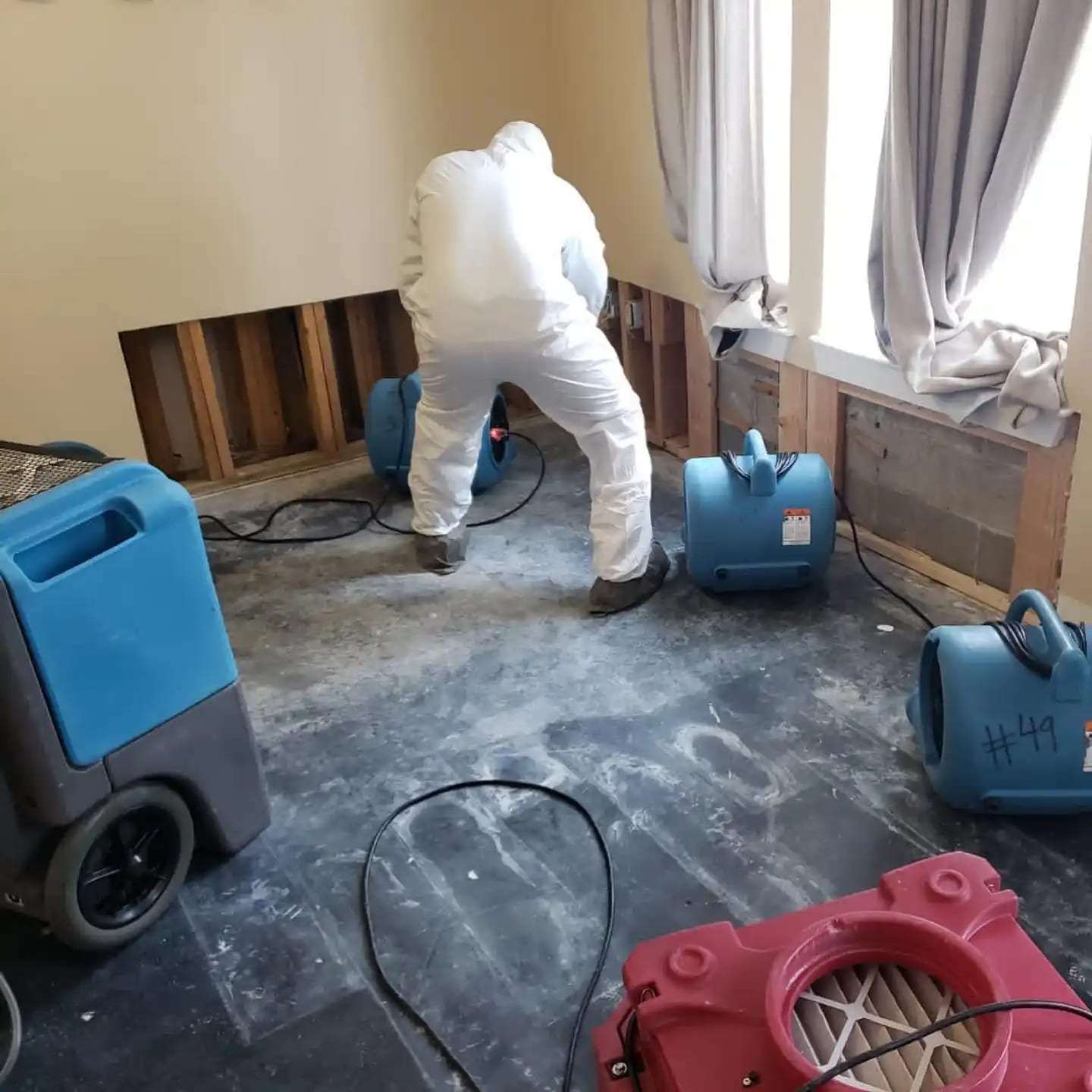
Technician checking flood-cut walls in a room with a dehumidifier and air movers. Illustrative image of the process; it does not document a job done for this site.
Common questions
Can one big fan do the job?
A single box fan rarely reaches wall bottoms, under cabinets or subfloor edges. Targeted air movers are used for that reason.
Why not just run my household dehumidifier?
A household unit can help with humidity but is usually too small for a wet room. Ask a drying contractor how the load compares with its capacity.
General information for Northglenn, not a quote or professional advice. In an emergency, call 911.