How each floor tends to respond
- Floor type
- Solid hardwood
- Typical reaction
- Boards swell, cup at the edges and may crown as they dry
- Salvage outlook
- Sometimes saved with controlled drying, though refinishing may follow
- Floor type
- Glued parquet
- Typical reaction
- Blocks loosen, buckle and may pop free
- Salvage outlook
- Often removed because the adhesive fails
- Floor type
- Engineered wood
- Typical reaction
- Layers separate and edges lift
- Salvage outlook
- Limited; thin veneers rarely recover
- Floor type
- Laminate
- Typical reaction
- Core swells and seams open
- Salvage outlook
- Typically replaced
- Floor type
- Sheet or plank vinyl
- Typical reaction
- Water gets under seams and sits on the subfloor
- Salvage outlook
- Surface may survive; subfloor needs checking
- Floor type
- Tile over slab
- Typical reaction
- Grout and the slab absorb water; tile itself is stable
- Salvage outlook
- Usually fine; check underlayment and baseboards
Why the layer below matters
Floor finishes sit on glue, underlayment, plywood or boards, and sometimes concrete. Water that gets under a plank or parquet block can stay there long after the top looks fine. Parquet, popular in homes of the middle of the twentieth century, is often glued to a subfloor with mastic, and the glue softens in water. Some older adhesives and backing materials contain asbestos, so lifting parquet or old vinyl without testing is not advisable in a home of that age.
Wood swells and then shrinks as it dries. If drying is rushed with excessive heat, boards can crack. If it is slow, mold can begin on the hidden side. Contractors sometimes use mat systems that pull air through the floor assembly to dry boards in place.
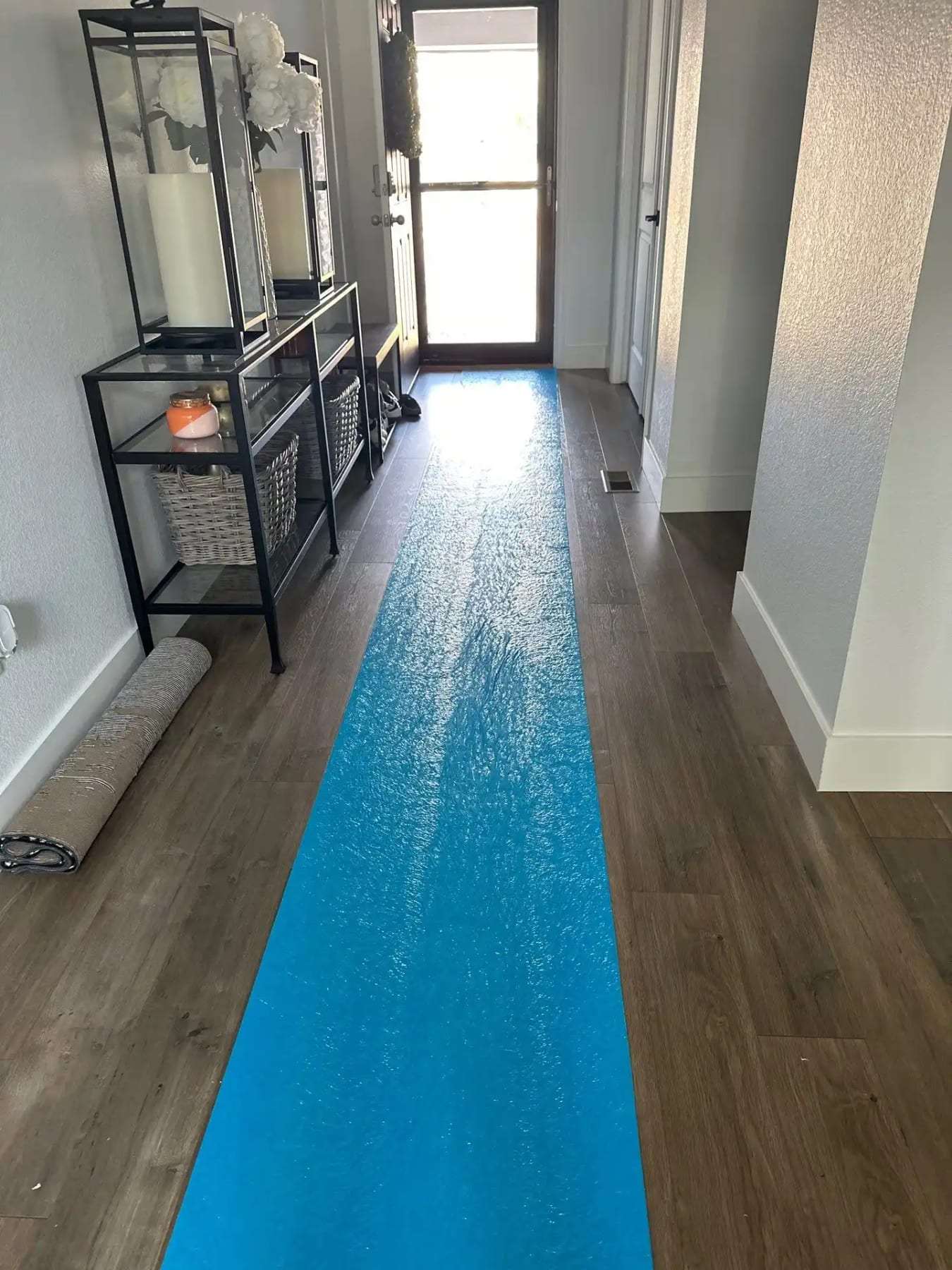
Hallway with a blue protective runner taped over the floor. Example of the work involved; the photo does not show a specific property or a job for this site.
What a careful assessment checks
Identify the floor and its backing
Knowing the layers shows how water might have spread under the top.
Measure moisture in boards and subfloor
Meters confirm what is wet beneath the surface.
Test old materials before removal
Older adhesives, tiles and sheet vinyl may need sampling.
Decide between drying in place and removal
Readings, floor type and the water's source guide the choice.
Common questions
Can cupped hardwood flatten again?
Sometimes, as it dries slowly. Sanding and refinishing is often considered only once the wood reaches its normal moisture level.
Is old parquet a concern for asbestos?
Possibly. Adhesives in some mid-century flooring contained asbestos, so testing before removal is prudent.
Does vinyl flooring need to come up after a leak?
Not always, but water can sit between vinyl and the subfloor. Moisture readings through or at the edges show whether the layer below is still wet, and lifting a corner is sometimes the only way to check.
General information for Northglenn, not a quote or professional advice. In an emergency, call 911.