Why touch is a poor test
Hand-feel is unreliable after a leak. Drywall can feel cool and dry on its face while the bottom plate behind it still holds water, and a plywood subfloor can look normal while its lower layers stay damp. Moisture readings turn a feeling into a number that can be written down, compared from day to day and shown to an adjuster later.
Northglenn homes built in the 1960s and 1970s mix drywall, softwood framing, plywood or plank subfloor and, in many basements, paneling over furring strips. Each material reads differently on the same meter, so the number only means something when it is compared with a reference for that same material.
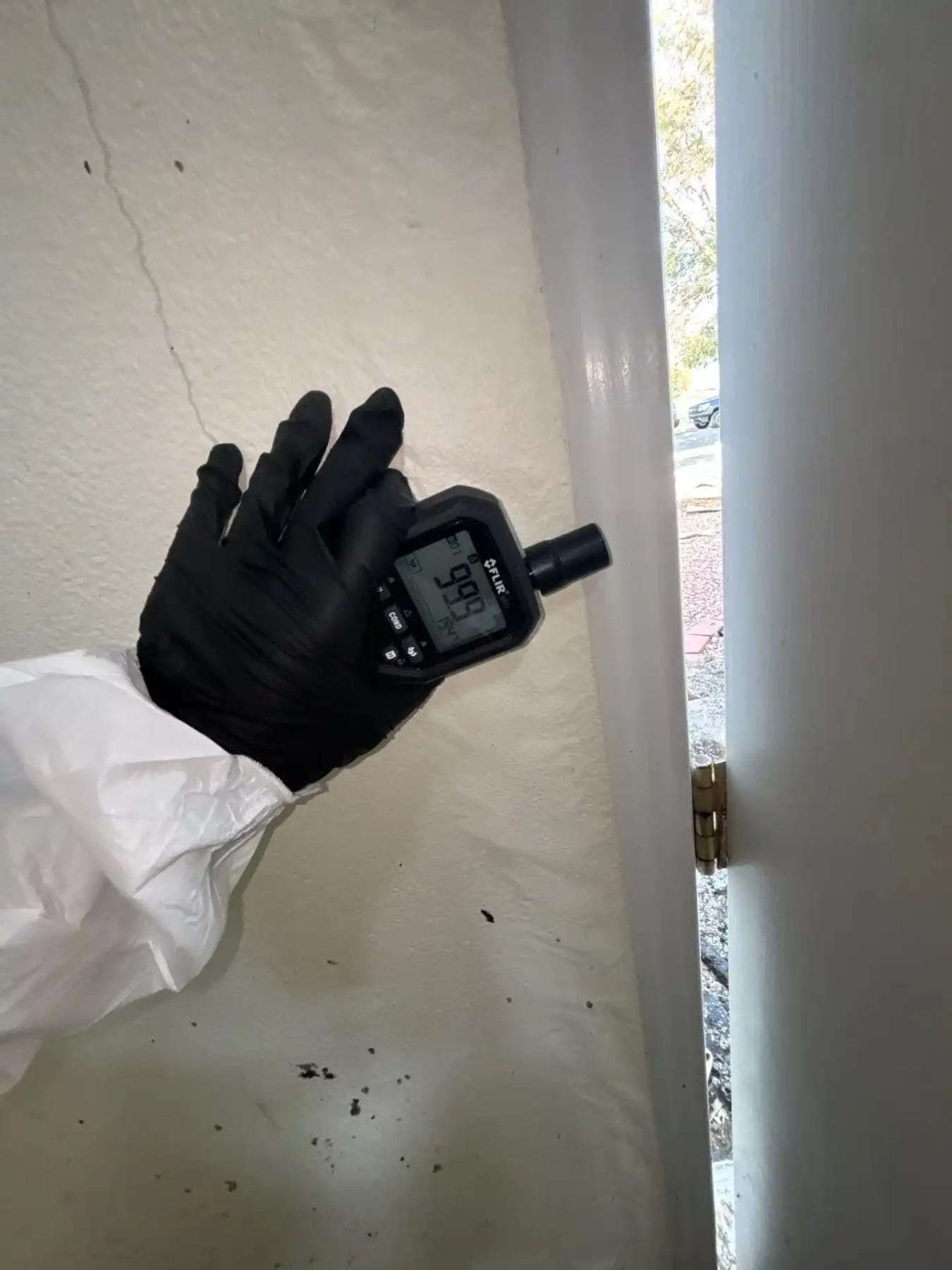
Gloved hand holding a moisture meter against a painted wall. A general example of this kind of work, not a photo of a particular home, business or job.
What the common tools measure
- Tool
- Pin meter
- What it reads
- Electrical resistance between two pins pushed into wood or drywall
- Best use
- Framing, trim, subfloor edges
- Limit
- Leaves tiny holes and reads only where the pins reach
- Tool
- Pinless meter
- What it reads
- Moisture in a zone below the surface using a sensor pad
- Best use
- Scanning large wall and floor areas without damage
- Limit
- Metal, foil backing and dense layers can skew results
- Tool
- Thermal camera
- What it reads
- Surface temperature differences
- Best use
- Finding where to measure, spotting cool damp patches
- Limit
- Shows temperature, not moisture content, so it needs meter confirmation
- Tool
- Thermo-hygrometer
- What it reads
- Air temperature and relative humidity
- Best use
- Judging whether room air can still absorb moisture
- Limit
- Says nothing about what is inside the walls
Typical instruments and what each one is good for.
How a dry standard is set
The idea is simple even though the paperwork varies.
Pick an unaffected reference
A reading is taken on the same material in a part of the house that never got wet, ideally in the same room type and on the same level.
Record the wet readings
Affected spots are measured and marked, so the same points can be read again on later visits.
Track the trend
Numbers should fall visit after visit. A reading that stalls often means equipment is not reaching that spot.
Compare with the standard
When wet-area readings match the reference, or sit within a small margin of it, that material counts as dry.
Reading the numbers
- Wood framing
- Often compared with a normal reference range for indoor lumber rather than a single universal number
- Drywall
- Meters have different scales for gypsum, so confirm which scale was used
- Concrete slab
- Dries slowly and may call for a different test than a surface meter
- Humidity in the room
- Falling relative humidity suggests drying is progressing
Common questions
Does a single dry reading mean the job is finished?
Not by itself. Readings should be taken across all affected materials, including low corners, wall bottoms and the basement ceiling below a main-floor leak.
Can I buy a meter and check myself?
Consumer meters can help you follow the trend, but their scales differ from professional units. Treat your numbers as a rough check and compare them with what a drying contractor records.
General information for Northglenn, not a quote or professional advice. In an emergency, call 911.